
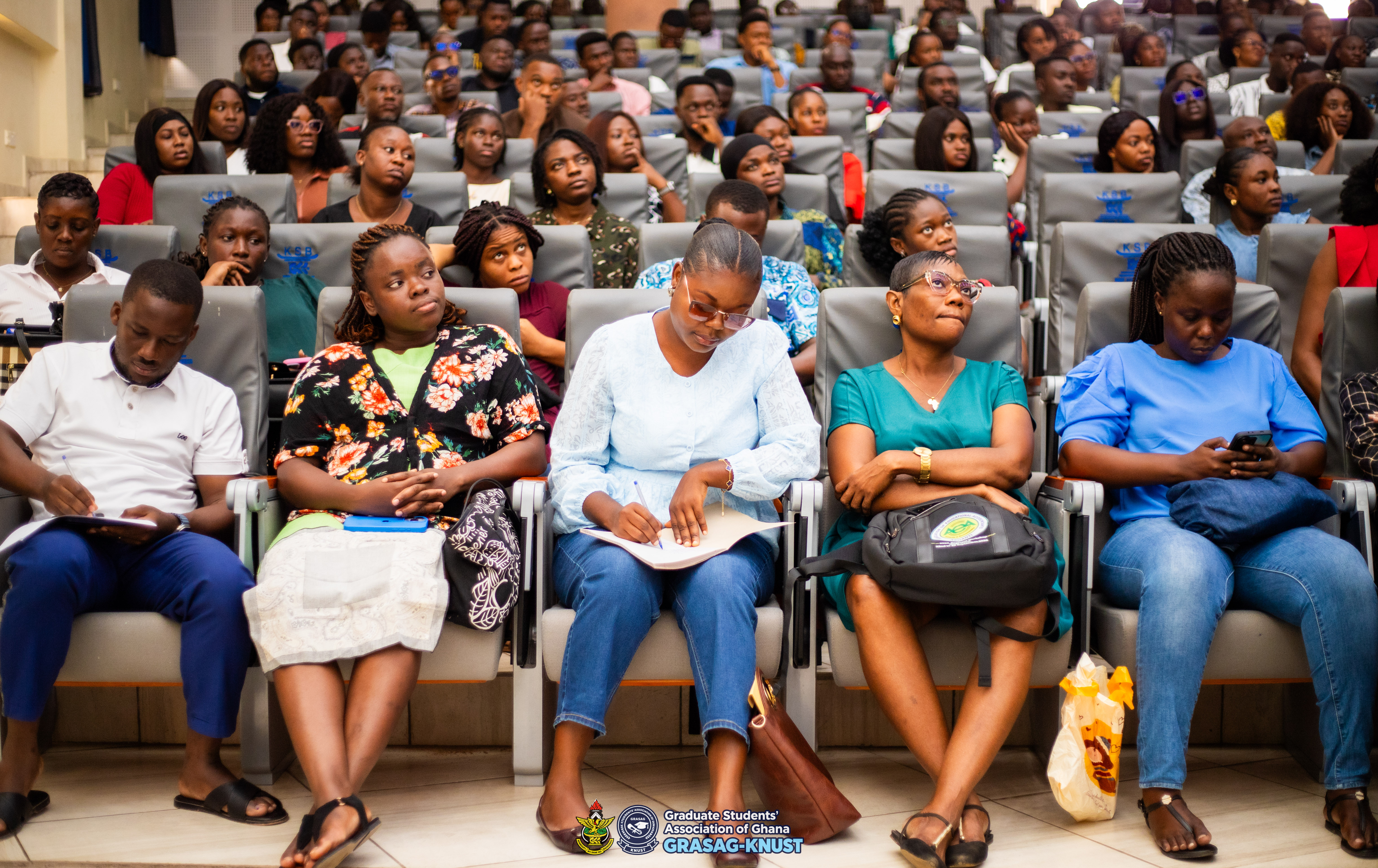
The School of Business at the Kwame Nkrumah University of Science and Technology, Kumasi (KNUST), has held an orientation programme for postgraduate students, outlining academic regulations, examination requirements and expectations for research integrity and the responsible use of artificial intelligence (AI).
The programme, organised for the 2026/2027 academic year, covered thesis supervision, registration procedures and support services available to students.
Welcoming the students, Professor Felicity Asiedu-Appiah, Vice-Dean of the KNUST School of Business (KSB), urged them to approach their studies with discipline, integrity and purpose.
She said their backgrounds and previous academic achievements should not limit their aspirations, adding that success would depend on their commitment to learning and how effectively they used the opportunities available.
“Whatever the school you attended, the village or city you come from, or your family background, you have earned your place here,” she said.
Prof. Asiedu-Appiah urged students to demonstrate professionalism, respect and accountability, saying KSB would provide guidance to help them achieve their academic and professional goals.
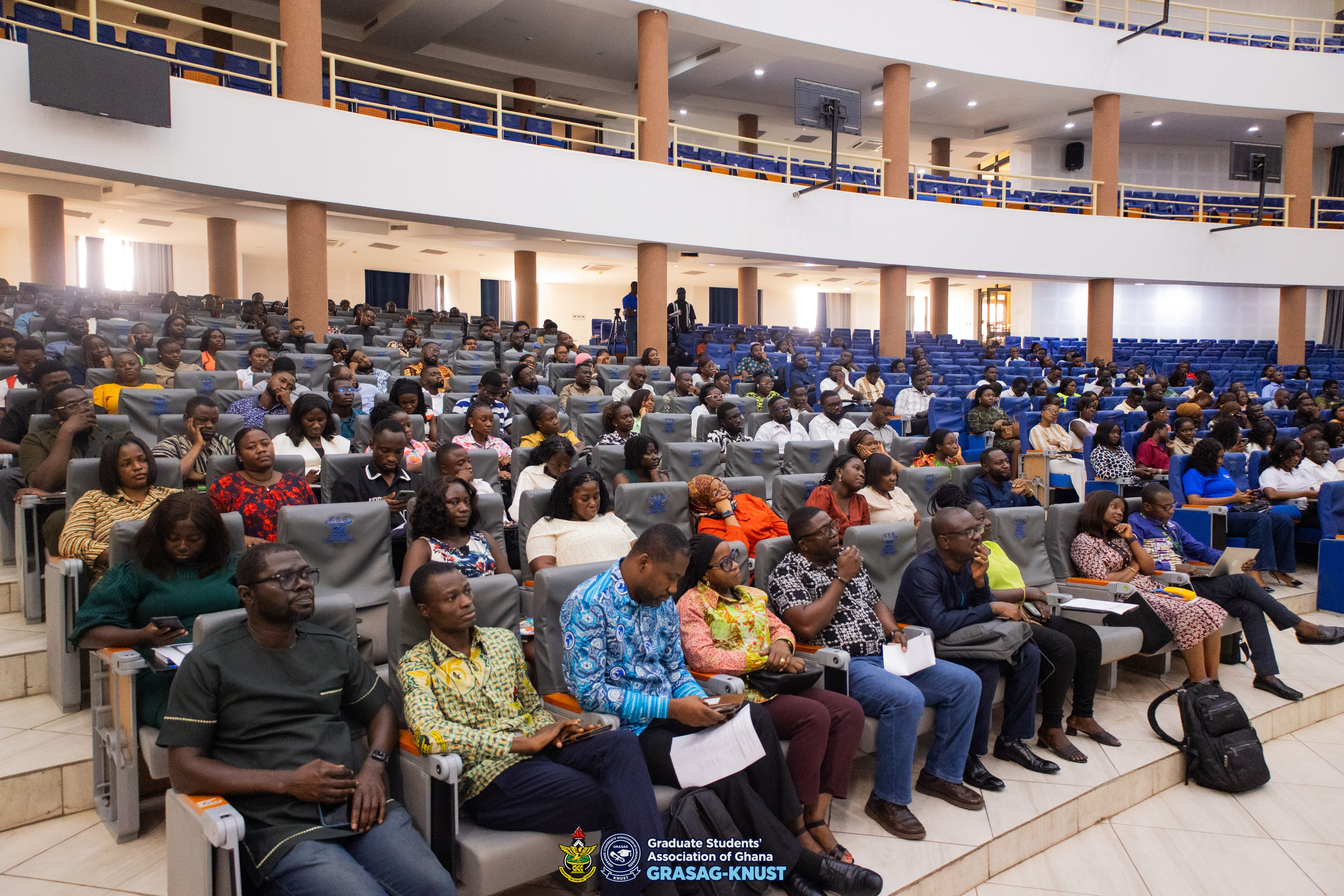
Professor Godfred Darko, Deputy Director of the School of Graduate Studies, outlined postgraduate regulations and urged students to complete their programme requirements within the stipulated period.
He said the school oversaw postgraduate programmes, supported quality assurance and facilitated communication among students, academic departments and university management.
Prof. Darko urged students to complete biometric and online course registration every semester until they submitted their final theses. Failure to register consistently could delay graduation, even after research had been completed, he said.
Students seeking to change programmes, defer their studies or obtain extensions must follow the prescribed procedures and secure formal approval before taking action, he added.
He said students must pass all registered and prescribed courses, meet the required academic average and complete the research and examination requirements for their programmes.
Timely completion, he added, required cooperation among students, supervisors and departments.
Dr Joseph Agana, Examinations Officer, outlined assessment procedures and examination regulations.
He said continuous assessment accounted for 40% of students’ final grades and end-of-semester examinations contributed 60%. A minimum cumulative weighted average (CWA) of 55% was required for a master’s degree, he added.
Dr Agana also discussed examination malpractice, probation, programme deferment and procedures for requesting the remarking of examination scripts. He urged students to observe examination hall rules, present valid identification and dress appropriately.
Professor Hannah Vivian Osei, who spoke on thesis writing and supervision, said research topics must align with students’ areas of specialisation and comply with departmental guidelines and the prescribed thesis structure.
Supervisors were expected to guide, advise and critique students’ work, but students remained responsible for producing original research, she said.
“Thesis quality is a shared responsibility. It doesn’t depend on the supervisor alone. It depends so much also on you,” she said.
Prof. Osei urged students to communicate regularly with their supervisors, respond promptly to feedback and meet agreed deadlines. She also cautioned against outsourcing research, saying students must take ownership of their projects.
On AI use, she advised students to exercise caution when incorporating AI-generated material into their theses. She stressed the need for authentic data collection, proper citation, informed consent and ethical clearance where required.
Technology should support students’ work without compromising the originality and credibility of their research, she said.
Professor Eric Appau Asante, AI Coordinator, said the university’s mandatory AI course aimed to equip students with the knowledge and skills to use the technology responsibly, ethically and effectively in their fields.
“Our main asking is that we should not produce students who do not know what AI is,” he said.
AI could help students refine research topics, review literature and identify research gaps, but should not replace independent thinking or decision-making, he added.
Prof. Appau Asante also reminded students that attending lectures or being enrolled in an online learning environment did not necessarily constitute formal course registration. He urged them to verify their registration status to avoid difficulties with academic records and graduation requirements.
Story: Ama Pokuaa Mensah


